
Abstract
Children’s biological reasoning about plants is usually studied through questions about growth, nutrition, or classification; far less is known about how children conceive of plants as social beings embedded in relationships. We present an exploratory content analysis of the “Do Plants Have Friends?” dataset (Rao, Sharma, & Reddy Boddu, 2026), in which 90 children aged 6–11 answered the question “Do you think plants have friends? If yes, who?” and then drew “the friend of the plant,” with each drawing subsequently described in text by a researcher. We developed a coding scheme spanning categories of nominated friends other plants, insects and invertebrates, other animals, humans, abiotic/environmental growth factors, and fantastical beings and applied it to both the verbal responses and the drawing descriptions. Most children (81/90, 90.0%) gave a codeable verbal answer; “other plants” (58.0% of responders) and abiotic growth factors such as sun, water, and soil (53.1%) were named most often, followed by insects (33.3%) and humans (22.2%). Verbal mentions of humans and of insects corresponded significantly with their appearance in the paired drawing (both p < .001), and drawings by older children (8–11 years) contained significantly more distinct depicted elements than those of younger children (6–7 years), t(83) = –2.20, p = .031, although the breadth of verbal answers did not differ by age. Drawings also revealed frequent anthropomorphism: talking trees, speech bubbles, hearts including among children who gave no verbal answer at all. We situate these findings within the literature on childhood animism, naive biology, plant blindness, and biophilia, and discuss what a “friendship” framing appears to elicit from children that a direct question about plant needs may not.
Keywords: children’s biological reasoning; anthropomorphism; animism; plant blindness; draw-and-write methodology; environmental cognition; content analysis
Introduction
Plants are, by most accounts, the organisms people notice least. Botanists have long observed that students, teachers, and the public systematically underattended to plants relative to animals, a pattern Wandersee and Schussler (2001) termed “plant blindness” and which Parsley (2020) has since proposed renaming “plant awareness disparity” to avoid an ableist disability metaphor while preserving the underlying observation: plants are visually present but cognitively backgrounded, treated as static scenery rather than as living things with needs, behaviour, and (in some framings) relationships. Most developmental research that does engage children with plants asks a causal or classificatory question: what plants need to grow, whether a plant is alive, how a seed becomes a tree. The “Do Plants Have Friends?” dataset (Rao, Sharma, & Reddy Boddu, 2026) asks something different. Ninety children aged 6 to 11 were asked, simply, “Do you think plants have friends? If yes, who?” and then invited to draw the friend they had named, or imagined. The question does not ask what a plant needs; it asks who a plant has, a small but consequential shift from a causal register to a social one.
That shift is theoretically interesting because it sits at the intersection of two long-standing lines of developmental research. The first concerns childhood animism: Piaget’s (1929) classic observation that young children readily attribute life, consciousness, intention, and social capacity to entities that adults do not consider to have them, clouds that move because they want to, the sun that follows you home. The second concerns naive or “vitalistic” biology: children’s tendency to reason about living things, including plants, by analogy to human bodily needs and processes, treating growth as something that happens because an organism actively takes in what it needs, rather than through a fully mechanistic causal chain (Inagaki & Hatano, 2006). A question about a plant’s “friend” invites both kinds of answer at once. A child could answer causally: sun, water, soil, the things a plant needs in order to live or socially, another plant, an insect, a person, a pet, an imaginary creature, or blend the two without apparent difficulty, as several children in this sample in fact do.
The dataset also offers something methodologically unusual: for each of the 90 children, a verbal answer and a drawing-based answer to essentially the same prompt are recorded side by side. Drawing has a long history in developmental research precisely because it can surface content that a child does not or cannot put into words (Backett-Milburn & McKie, 1999); prior studies asking children to simply draw a plant have found that a meaningful minority of children spontaneously include animals in the scene even without being asked about companionship (about one in five children, per Villarroel, Antón, Zuazagoitia, & Nuño, 2018), and that some children, roughly one in ten kindergartners in one American sample give the plant itself a face (Anderson, Ellis, & Jones, 2014). The present dataset extends this line of work by pairing an explicit “friend” prompt with a matched drawing description for the same child, allowing a direct, within-child comparison between what a child says and what a child draws when asked to think about a plant’s social world.
In this paper we conduct an exploratory content analysis of the openly available dataset. We develop and apply a coding scheme to both the verbal responses and the researcher-authored drawing descriptions, characterize the range and relative frequency of the entities children nominate as plants’ friends, test the correspondence between what children say and what they draw, examine whether the breadth or elaboration of children’s answers varies with age across this 6–11-year window, and describe qualitative patterns, anthropomorphism, the importation of children’s own social worlds (parents, teachers, pets) into the plant’s friend list, and occasional fantastical content that a purely quantitative summary would miss. Because this is a secondary analysis of a small, convenience-sampled, single-coder dataset, we treat all statistical results as descriptive and hypothesis-generating rather than confirmatory, and we return to these constraints in the Limitations section.
Background and Related Work
Plant blindness and children’s attention to plants
Wandersee and Schussler (2001) defined plant blindness as the inability to notice plants in one’s environment, leading to an inability to appreciate their biological features and importance, and to an anthropocentric ranking of plants as inferior to animals. Parsley (2020) has since argued for the term “plant awareness disparity,” identifying four contributing dimensions: visual attention, attitude/interest, knowledge, and the relative prioritization of animals over plants that are
changeable through education rather than fixed, as a disability metaphor implies. Both framings converge on a practical claim relevant here: children are not incapable of engaging richly with plants, but they typically need to be prompted to do so, since plants do not spontaneously capture attention the way moving, expressive animals do. A dataset built around a direct, imaginative prompt about a plant’s social world is, in effect, a test of what happens once that prompting is supplied.
Animism and anthropomorphism in childhood
Piaget (1929) described young children’s animism: the attribution of life, consciousness, and intentionality to inanimate or non-human entities as passing through stages that gradually restrict which entities are seen as “alive” or agentive, with the broadest, most indiscriminate animism concentrated in the preoperational years (roughly ages 2–7) and narrowing thereafter. Subsequent research has complicated a strict stage account, showing that anthropomorphic and animistic reasoning persists well past early childhood and is often elicited or suppressed by task framing rather than being a fixed developmental marker that is simply outgrown. A question that explicitly asks who a plant’s “friend” is licenses, almost by its wording, an animistic or anthropomorphic reading: a friend is a social role, and assigning one to a plant requires treating the plant, at least provisionally, as a being capable of having relationships.
Naive biology and vitalistic causality
Inagaki and Hatano’s programme of research on children’s “naive biology” shows that young children construct a coherent, biology-specific causal framework distinct from both naive physics and naive psychology, reasoning about bodily processes such as growth, illness, and death through a vitalistic causal schema in which organisms actively take in vital power or substances they need (Inagaki & Hatano, 2006). Consistent with this, Inagaki (1996) found that children recognize commonalities between animals and plants that both need food and water, grow, and can die by drawing analogies to the human body, well before they master a fully biological, mechanistic understanding of physiology. This literature predicts that when asked what keeps a plant company or what a plant “has,” children may readily default to naming the very things a vitalistic schema treats as vital inputs (sun, water, soil) even when the question is phrased socially rather than causally, because for a young child the line between “what a plant needs to live” and “who keeps a plant company” may not be sharply drawn.
Biophilia, biophobia, and children’s affective orientation to nature
Work in the biophilia tradition examines children’s affective responses to the natural world, finding that even very young children display both attraction (biophilia) and aversion (biophobia) toward different natural elements: Olivos-Jara, Segura-Fernández, Rubio-Pérez, and Felipe-García (2020) found that five-year-olds most often attributed happiness to landscapes and vegetation, while fear was the second most common response overall, concentrated on predatory animals, snakes, and some invertebrates.
Because “friend” is an affectively warm, positively valenced social category, the plant-friend prompt used in the present dataset is likely to pull selectively for biophilic content companionable insects such as butterflies and bees rather than feared ones, a possibility we return to when interpreting the high rate of insect mentions in this sample.
Drawing and the draw-and-write method in developmental research
The draw-and-write (or draw-and-tell) method invites children to draw in response to a prompt and then to explain or be asked about the drawing, on the premise that drawing lowers the verbal burden on children and can surface content, especially affectively or conceptually complex content, that a purely verbal interview misses (Backett-Milburn & McKie, 1999).
Applied specifically to plants, Anderson, Ellis, and Jones (2014) analysed 182 kindergarten and first-grade children’s drawings of plant structure and found that children held narrow botanical concepts, frequently omitting roots or leaves, and that a notable minority of kindergartners (about 10%) spontaneously drew the plant with a face. Villarroel, Antón, Zuazagoitia, and Nuño (2018) similarly found that when simply asked to draw plants, roughly one in five children spontaneously included at least one animal, and about 6% depicted an animal directly interacting with a plant (eating from it, living on it, resting on it), suggesting an intuitive sense of ecological relationship even without being asked about it.
A related study found that the specific content of children’s plant drawings shifts with educational level and, to a lesser extent, gender (Villarroel, Antón, Nuño, & Zuazagoitia, 2024). The present dataset differs from this prior drawing literature in one key respect: rather than asking children to simply draw a plant, it asks them to draw the plant’s friend, making companionship and relationship the explicit subject of the drawing rather than an incidental addition.
The present study
Taken together, this literature suggests three things a child might do when asked who a plant’s friend is: answer causally, naming the abiotic and biotic inputs a vitalistic schema treats as what a plant needs (sun, water, soil, other plants); answer socially or animistically, naming living companions insects, animals, people, pets, or imaginary beings and sometimes personifying the plant itself; or blend the two. No prior published analysis of this specific dataset exists to our knowledge; the present paper offers a first systematic content analysis of it, treating the verbal responses and the paired drawing descriptions as two channels onto the same underlying question.
Research Questions
This study addresses four exploratory research questions:
RQ1. What kinds of entities do children aged 6–11 nominate as “friends” of plants, and how prevalent is each kind?
RQ2. How do children’s verbal nominations correspond with what they subsequently draw, for the entity categories that can be compared across both channels?
RQ3. Are there age-related differences, across this 6–11-year span, in the breadth of friend-categories named verbally or in the elaboration (number of distinct depicted elements) of children’s drawings?
RQ4. To what extent do children’s answers reflect causal/ecological reasoning about plant growth requirements versus social or anthropomorphic reasoning about companionship, and do these two registers co-occur within the same child’s answer?
Method
Dataset and participants
This study reanalyses the publicly deposited “Do Plants Have Friends?” dataset (Rao, Sharma, & Reddy Boddu, 2026; Goyal P., 2026 and Blue Blocks Micro Research Institute, 2026b), archived
on Zenodo (Version 1, 2026; DOI: 10.5281/zenodo.22026911) under a Creative Commons Attribution 4.0 International licence. The deposit comprises 90 children aged 6 to 11 years (age recorded for 85; mean age 7.79 years, SD = 1.39), collected in an educational setting. Each child answered the verbal prompt “Do you think plants have friends? If yes, who?”, with the response recorded verbatim, and then completed a blank A4 stimulus sheet titled “Draw The Friends Of Plants,” included in the deposit as a PDF. The sheet was deliberately kept sparse, without example illustrations, to avoid priming children toward a particular answer. Each completed drawing was subsequently described in text by a researcher, capturing the depicted elements; the original images themselves are not part of the public deposit.
The dataset is distributed as two parallel Excel files containing the same 90 records: one with some children’s idiosyncratic spellings normalized for readability, and one used for the present analysis preserving children’s original wording and spelling verbatim (e.g., “HARD POTTOR,” “awatowand”), which the dataset’s documentation recommends for analyses where children’s original language matters. In both files, children’s own names and the names of any classmates they mentioned were replaced with the placeholder “Friend Name” prior to deposit; teacher names (e.g., “Ms Sandhya”) and pet names (e.g., “Luna,” “Coco”) were retained as non-child contextual information. No parent names appear in the data, only generic relationship terms (“mother,” “mom”) and self-reference (“me,” “myself”).
Two data-quality features are inherited from the source deposit and are preserved in the analysis reported here. First, the participant identifier (child_code) is not a guaranteed unique key: the code 502 is shared by two different children (ages 9 and 6), who gave unrelated answers (“trees, plants, and insects” and “sun, water, metal, mm,” respectively); row position was therefore used as the effective unit of analysis rather than child_code. Second, missing data are non-trivial: 9 of 90 children (10.0%) gave no verbal response, 5 (5.6%) have no recorded age, and 2 (2.2%) have no child_code; all 90 children have an accompanying drawing description. These missingness counts were verified against the dataset’s own documentation prior to analysis and matched exactly.
Coding scheme
We developed a content-analytic coding scheme in two parts, applied respectively to the verbal responses and to the drawing descriptions (Blocks Micro Research Institute, 2026c). For verbal responses, seven non-mutually-exclusive categories were defined inductively from a full read of
all 90 records, then operationalized as keyword and pattern matches applied to lower-cased text (Table 1): other plants, insects and invertebrates, other (non-insect) animals, humans, abiotic/environmental growth factors, fantastical or fictional beings, and an uncodable/other residual category for idiosyncratic responses that fit none of the above (e.g., “toffee,” “drawn life”). A single additional single-item category, fungi, was created post hoc for one response mentioning “mushrooms.” Because children frequently named several entities in a single response (e.g., “Sun, Earth, water” or “bird, monkey, butterfly”), a response could receive more than one code; percentages in the Results therefore sum to more than 100%.
|
|
|
|---|---|---|
|
|
|
|
|
|
|
|
|
|
|
|
|
|
|
|
|
|
|
|
|
|
|
|
Table 1. Coding scheme applied to children's verbal responses (n = 90; categories not mutually exclusive).
For the drawing descriptions, a parallel ten-category scheme was developed (Table 2), capturing whether the description mentioned the sun; water or rain; a human figure; roots or underground structures; insects or pollinators; other animals; anthropomorphic content (faces, smiles, speech bubbles, hearts, personified dialogue); multiple plants or a plant community; a labeled or annotated diagram style; or a named pet. As with the verbal coding, categories were not mutually exclusive.
Coding was performed by the authors using a combination of regular-expression keyword matching and manual verification of every record, with particular attention to ambiguous cases (for example, “everybody” was coded as a human reference; “nature” and “drawn life” were coded as uncodable because they name no specific entity; a mention of “mushrooms” was coded separately as fungi rather than folded into the plant category, since fungi are not botanically plants). This was a single-coder analysis; no second, independently trained coder double-coded a subsample to compute inter-rater agreement, which the dataset’s own documentation recommends for scoring reuse (e.g., via Cohen’s κ on ~15–20% of records). We treat this as a methodological limitation of the present analysis and return to it in Section 7.
|
|
|---|---|
|
|
|
|
|
|
|
|
|
|
|
|
|
|
|
|
|
|
|
|
Table 2. Coding scheme applied to researcher-authored drawing descriptions (n = 90; categories not mutually exclusive).
Analytic strategy
Analyses were conducted in Python (pandas, scipy). We first computed descriptive frequencies and percentages for each verbal-response and drawing-description category, expressed both as a share of all 90 children and as a share of the 81 children who gave a codeable verbal response. We then classified each verbal response by whether it named at least one living entity (a plant, insect, animal, human, or fantastical being), at least one abiotic/environmental factor, both, or neither, to characterize the balance between causal/ecological and social/animistic content.
To address RQ2, we cross-tabulated the presence versus absence of a human-related code in the verbal response against the presence versus absence of a human figure in the paired drawing description, and did the same for insect-related codes, using chi-square tests of association with Fisher’s exact test as a robustness check given some small expected cell counts; other category pairs had cell counts too sparse for meaningful inferential testing and are reported descriptively only. To address RQ3, children with a recorded age were split into a younger group (6–7 years, n
= 41) and an older group (8–11 years, n = 44), with five children of unknown age excluded from age-based comparisons; Fisher’s exact tests compared category-mention prevalence between groups, an independent-samples t-test (with a Mann–Whitney U test as a non-parametric check) compared the number of distinct drawing categories per child (a proxy for drawing elaboration) between groups, and Pearson and Spearman correlations related continuous age to the number of verbal categories named and to the number of drawing categories depicted, for the 85 children with known age. All tests were two-tailed with α = .05. Given the number of comparisons conducted, the exploratory nature of the coding scheme, and the modest sample size, no correction for multiple comparisons was applied; p-values are reported and interpreted descriptively, as hypothesis-generating rather than confirmatory (see Section 7).
Ethics
This dataset concerns minors. All data used here were already anonymized by the original data depositors prior to public release: children’s own names, and any classmates’ names they mentioned, were replaced with the placeholder “Friend Name”; teacher and pet names were retained as non-child contextual information by the depositors’ documented policy (Blue Blocks Micro Research Institute, 2026a). The present study collected no new data from children,
conducted no contact with participants, and worked exclusively with the public, de-identified Zenodo deposit under its stated CC BY 4.0 licence. Readers intending further reuse should consult the dataset’s own documentation regarding consent and ethics approvals covering open sharing of this material.
Results
Sample characteristics
Age was recorded for 85 of the 90 children (94.4%), ranging from 6 to 11 years (M = 7.79, SD = 1.39); the distribution is shown in Table 3 and Figure 1 and is concentrated in the younger half of the range, with 6- and 7-year-olds together accounting for 45.6% of children with a known age. Nine children (10.0%) gave no verbal response to the friend question; all 90 have an accompanying drawing description, and the majority of children who left the verbal-response field blank still produced an elaborated drawing (see Section 5.6).
|
|
|
|---|---|---|
|
|
|
|
|
|
|
|
|
|
|
|
|
|
|
|
|
|
|
|
|
|
|
|
Table 3. Age distribution of participants (n = 90).
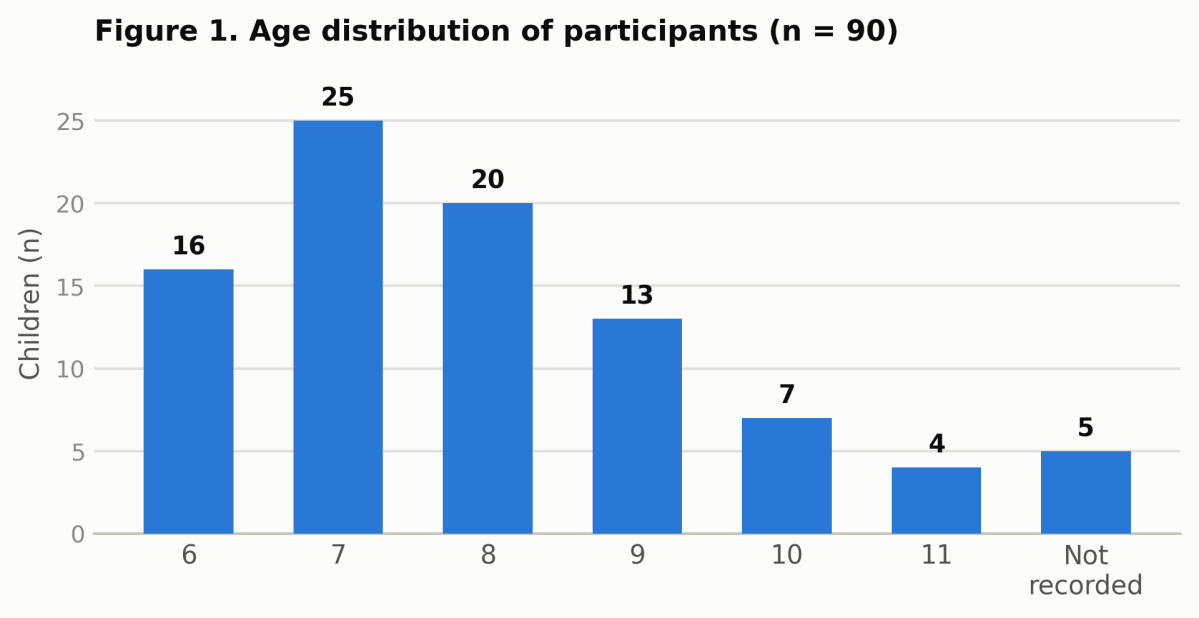
Figure 1. Age distribution of participants (n = 90).
What children said: verbal response categories (RQ1, RQ4)
Table 4 and Figure 2 give the frequency of each verbal-response category, both as a proportion of all 90 children and as a proportion of the 81 children who gave a codeable response. The single most common category was other plants (52.2% of all children; 58.0% of responders), closely followed by abiotic/environmental growth factors such as sun, water, and soil (47.8%; 53.1%). Insects and invertebrates were named by 30.0% of children (33.3% of responders), humans by 20.0% (22.2%), and other animals by 12.2% (13.6%). Fantastical beings (2.2%) and fungi (1.1%) were rare, and 7.8% of children gave an uncodable, idiosyncratic answer (e.g., “toffee,” “chocolate,” “drawn life”).
Classifying each response by whether it drew on living versus abiotic content showed that a plurality named at least one living entity but no abiotic factor (“living only”: 35 children, 38.9%), while a near-equal number blended living and abiotic content in a single answer (33 children, 36.7%, e.g., “Plant, Water, Sun, Wind,” which names both another plant and three growth factors in one breath). A smaller group named only abiotic factors with no living companion (10 children, 11.1%; e.g., “Sun, Earth, water”), 3 children (3.3%) gave an uncodable-only answer, and 9 (10.0%) gave no response at all. That nearly four in ten children spontaneously combined a living “friend”
with a non-living growth requirement in the same answer, without apparent difficulty or contradiction, is discussed further in Section 6 (Figure 3).
|
|
|
|
|---|---|---|---|
|
|
|
|
|
|
|
|
|
|
|
|
|
|
|
|
|
|
|
|
|
|
|
|
|
|
|
|
|
|
|
|
|
|
|
|
Table 4. Frequency of verbal-response categories (n = 90; categories not mutually exclusive).
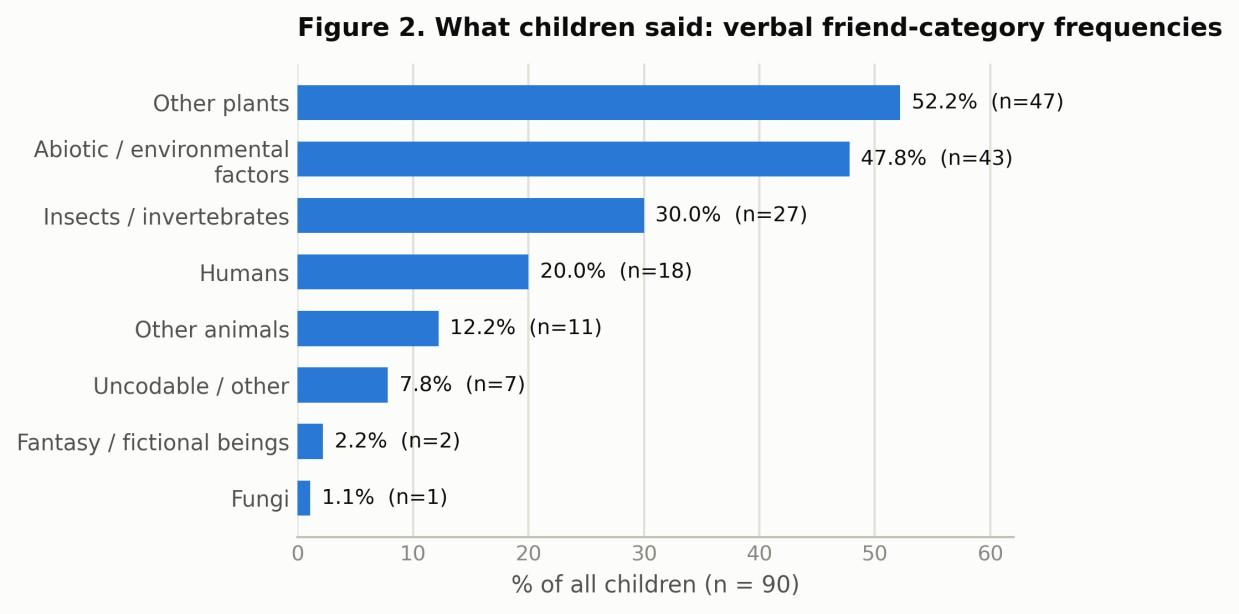
Figure 2. What children said: verbal friend-category frequencies (% of all 90 children).
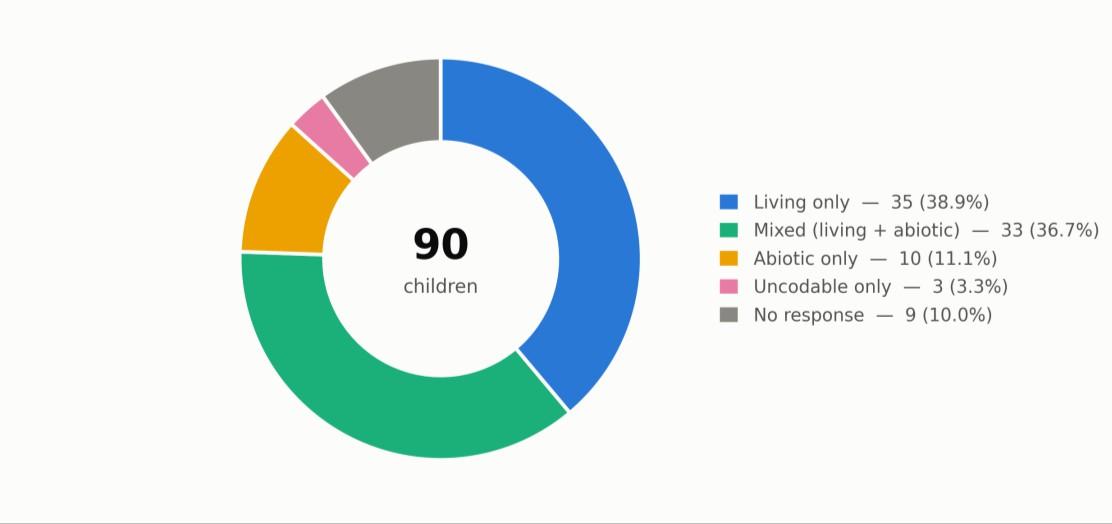
Figure 3. Living vs. abiotic content of verbal responses (n = 90).
|
|
|
|---|---|---|
|
|
|
|
|
|
|
|
|
|
|
|
|
|
|
|
|
|
|
|
|
|
|
|
|
|
|
|
|
|
Table 5. Frequency of drawing-description categories (n = 90; categories not mutually exclusive).
What children drew: drawing-description categories
Table 5 and Figure 4 give the frequency of each drawing-description category across all 90 drawings. The most commonly depicted elements were the sun (57.8%) and water or rain (52.2%),
followed by insects or pollinators (38.9%) and a human figure (30.0%). Explicit anthropomorphism — a face, a smile, a speech bubble, a heart, or personified dialogue between plants, appeared in 20.0% of drawings. Other (non-insect) animals appeared in 18.9%, a labelled or annotated diagram style in 16.7%, visible roots or underground structures in 15.6%, multiple plants or a plant community in 10.0%, and a named pet in 2.2%.
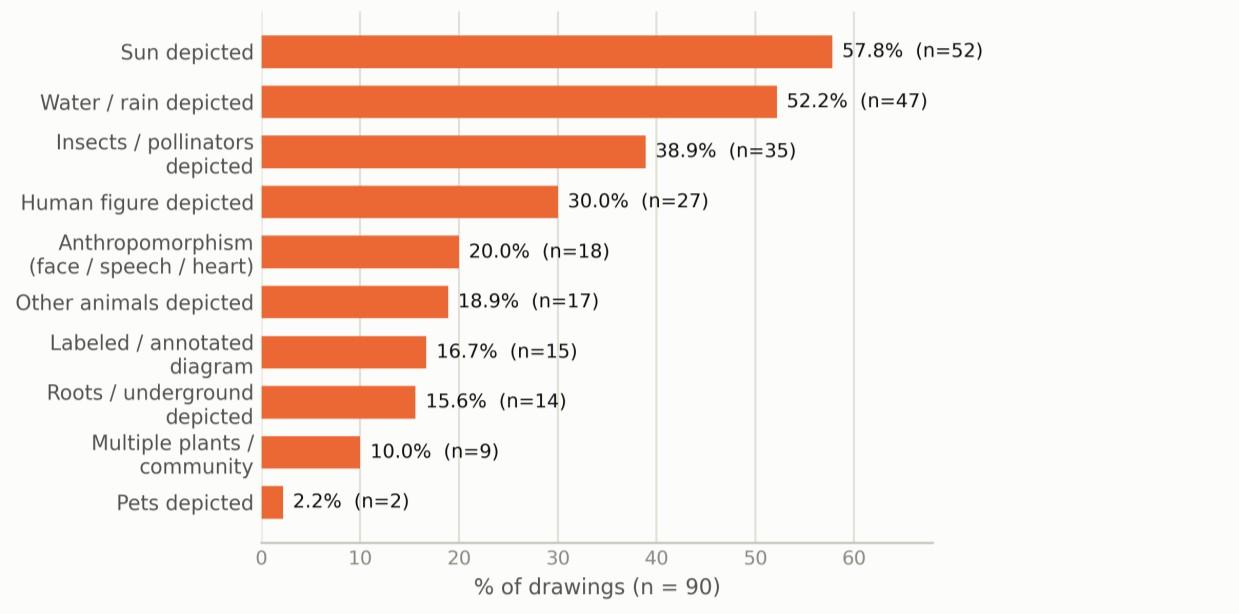
Figure 4. What children drew: drawing-description category frequencies (% of 90 drawings).
Correspondence between verbal responses and drawings (RQ2)
For the two categories with sufficient cell counts for inferential testing, verbal mentions corresponded significantly with drawing content. Among the 18 children who verbally named a human, 13 (72.2%) also drew a human figure, compared with only 14 of the 72 children (19.4%) who did not verbally mention a human, χ²(1) = 16.67, p < .001; Fisher’s exact p < .001, odds ratio
= 10.77 (Table 6; Figure 5). Among the 27 children who verbally named an insect, 19 (70.4%) also drew an insect, compared with 16 of the 63 children (25.4%) who did not verbally mention an insect, χ²(1) = 14.25, p < .001; Fisher’s exact p < .001, odds ratio = 6.98.
|
|
|
|
|
|
|---|---|---|---|---|---|
|
|
|
|
|
|
|
|
|
|
|
|
Table 6. Cross-tabulation of verbal and drawn content for human and insect categories.
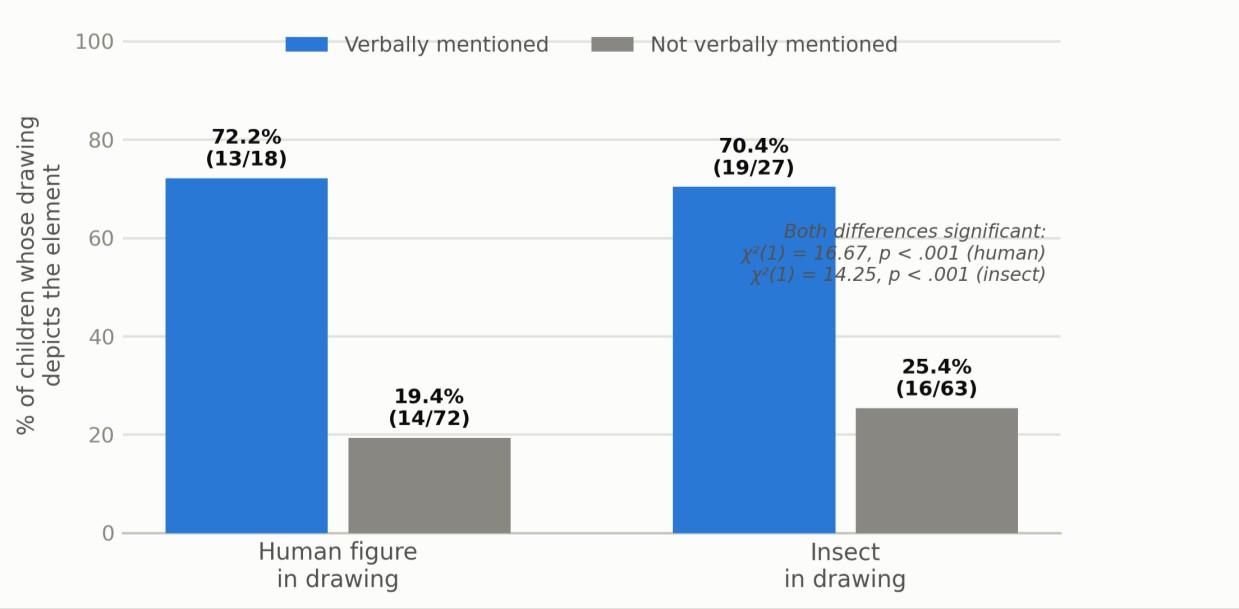
Figure 5. Percentage of children whose drawing depicts a human figure or insect, by whether that entity was named verbally.
The association, while strong, was far from perfect in both directions: five children who verbally named a human did not draw one, and more strikingly 14 children who never mentioned a human verbally nonetheless drew one, and 16 children who never mentioned an insect verbally nonetheless drew one. The two channels are therefore related but not redundant; a nontrivial share of content appears in the drawing that is absent from the child’s spoken or written answer, a pattern discussed further in Section 6.
Age patterns (RQ3)
The number of distinct friend-categories a child named verbally did not differ meaningfully between younger (6–7 years; M = 1.63, SD = 1.02, n = 41) and older (8–11 years; M = 1.82, SD
= 1.19, n = 44) children, nor did it correlate with continuous age (Pearson r = –.03, p = .785; Spearman ρ = –.02, p = .834, n = 85). Category-by-category comparisons between the two age groups likewise showed no statistically significant differences for any of the five most common categories, although the youngest and oldest halves of the sample showed a directionally larger gap for abiotic/environmental content (39.0% of younger children vs. 56.8% of older children, Fisher’s exact p = .130) than for any other category (Table 7; Figure 6).
|
|
|
|
|---|---|---|---|
|
|
|
|
|
|
|
|
|
|
|
|
|
|
|
|
|
|
|
|
Table 7. Age-group comparison of verbal-response category prevalence (younger 6–7y, n = 41; older 8–11y, n = 44; 5 children of unknown age excluded).
Drawing elaboration told a different story. The number of distinct categories depicted in a child’s drawing was significantly higher for older children (M = 3.00, SD = 1.51, n = 44) than for younger children (M = 2.29, SD = 1.45, n = 41), as shown in Figure 7; independent-samples t(83) = –2.20, p = .031; a Mann–Whitney U test confirmed the difference non-parametrically, U = 672.5, p =
.040 (Figure 7). This categorical age-group effect was not mirrored by a significant continuous correlation between age and drawing elaboration across the full 85-child sample with known age (Pearson r = .095, p = .386; Spearman ρ = .127, p = .247), a discrepancy we note as likely reflecting the modest sample size and the coarseness of a two-group age split, and return to in the Limitations.
The rate of explicit anthropomorphism in drawings was similar across age groups (17.1% of younger children’s drawings vs. 22.7% of older children’s), suggesting that whatever develops between 6 and 11 in this sample, it is not a straightforward decline in personification (see Section 6.3).
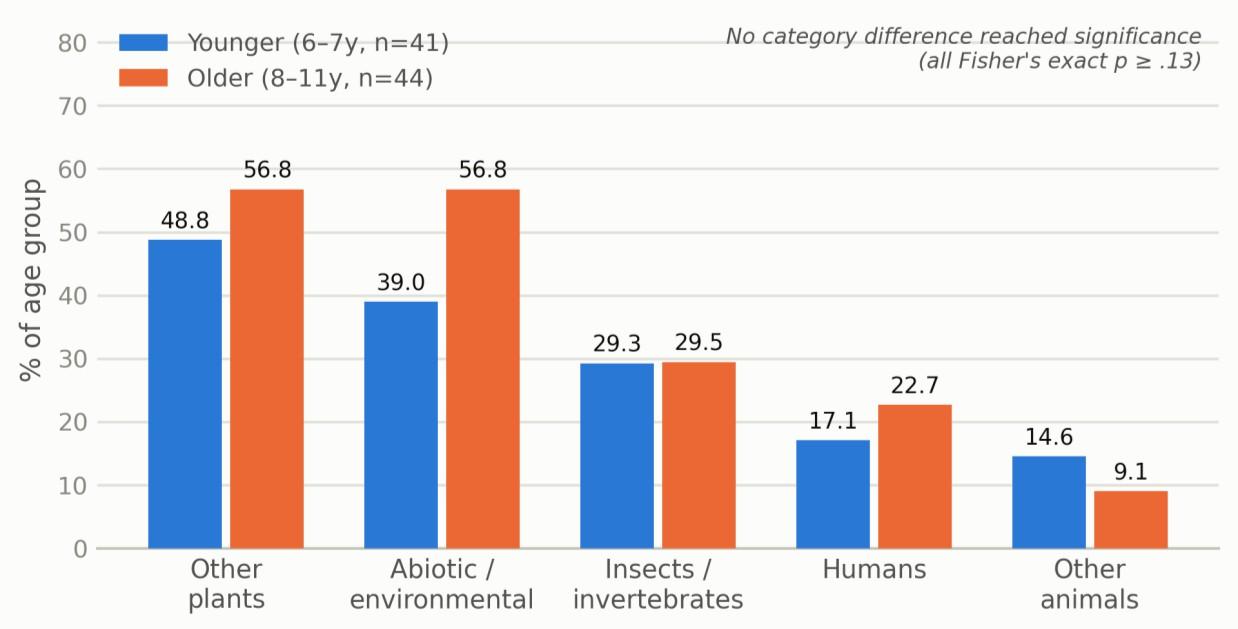
Figure 6. Verbal friend-category prevalence by age group; no category difference reached significance.
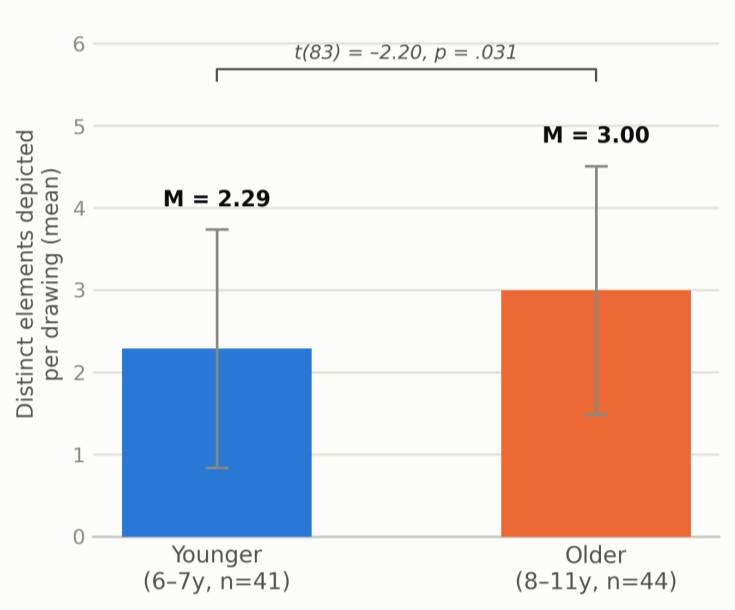
Figure 7. Mean number of distinct elements depicted per drawing, by age group (error bars = SD).
Qualitative patterns
Blending causal and social registers
Many responses combined a growth-requirement answer with a companionship answer in a single list, with no apparent sense that these were different kinds of things. Two eleven-year-olds independently gave the identical phrase “water, air, minerals, sun and plants,” each paired with a drawing described as a “concept diagram with labelled components”, a pairing that plausibly reflects a shared classroom lesson on plant needs rather than two children spontaneously arriving at identical language, a reminder that these responses are shaped by instruction as well as by individual reasoning.
Personification and self-inclusion
Several children personified the plant directly or placed themselves in a companionate relationship with it:
“My friend is the sun” (age 9) — drawing shows a simple tree beside a large personified sun.
“I Am His Friend ‘Friend Name’” (age 7) — drawing shows a tree, a human figure with an umbrella in the rain, described as “personalized response indicating self as friend.”
“Me (Human being)” (age 11) — drawing shows a human figure beside a potted succulent.
“mother tree” (age 7) — drawing shows a potted plant with five colourful flowers.
Importing a personal social network
Two eight-year-olds produced list-form answers that folded family members, a teacher, and named pets in among ecological elements, treating the plant’s friend list as coextensive with their own:
“mom, me, ‘Friend Name’, flower, Luna, Luckal, bee, ant, sun, water, butterfly, ‘Friend Name’, ‘Friend Name’” (age 8)
“sun, Ms Sandhya, coco, snazzy, luna, water, ‘Friend Name’, myself, ‘Friend Name’, ‘Friend Name’, mud, bee, bush, flowers” (age 8)
Both children’s drawings correspondingly depict labeled stick-figure groups of family, friends, and pets alongside ecological elements (sun, water, a bee), indicating that for at least these two
children, the task was read as an invitation to map their existing friendship network onto the plant rather than to reason abstractly about plant biology.
Fantastical content
A small number of answers introduced fictional or imaginative figures:
“Harry Potter” (age 6) — the paired drawing shows only a realistic tree, with no depicted evidence of the named character, an interesting verbal–drawing mismatch.
“Tree, ‘Friend Name’, Mother, mermaid ‘Friend Name’” (age 7) — the drawing does depict a mermaid figure alongside a tree and two human figures.
“5 trees, me, and a giraffe” (age 7) — the drawing description itself characterizes the resulting scene as “an imaginative mixed scene.”
Anthropomorphism in drawings, independent of the verbal answer
Drawings frequently depicted trees or plant roots in dialogue, via speech bubbles, regardless of whether the child’s verbal answer had mentioned anything social at all. Examples include two trees “conversing” via speech bubbles; three trees with “interconnected root systems and speech bubbles (HI, HELLO) between roots… showing root communication”; two tree-figures with faces exchanging “let’s be friends” / “OK”; and one drawing in which a tree’s speech bubble offers sunlight in exchange for water and a rain cloud replies “sure plant,” blending scientific vocabulary (a light-for-water exchange) with cartoon-style dialogue in a single image. Notably, several of the most elaborately personified drawings — including one depicting “two anthropomorphic plant faces with bright lime and pink coloring, speech bubbles showing personification and interaction” and another showing a fully labeled scene with a tree, insects, a sun, human figures, and three named pet dogs — belong to children who left the verbal-response field blank, underscoring that the drawing channel accessed content the verbal channel, for these children, did not.
Idiosyncratic and uncodable answers
A handful of responses resisted categorization altogether — “toffee” (age 7), “tree, sun, chocolate” (age 6), “drawn life” (age 7) — illustrating both the limits of an adult-imposed coding scheme applied to young children’s language and the value of the raw-spelling data file for preserving such responses rather than normalizing them away.
Discussion
A social question, answered causally
The single most common response to “who is the plant’s friend?” was not a person, an animal, or even an insect, but another plant or an abiotic growth factor such as sun, water, or soil. This is a striking result given the explicitly social phrasing of the prompt. It suggests that for many children in this sample, the dominant available schema for reasoning about what a plant “has” or “needs” is the causal-ecological one described by naive/vitalistic biology (Inagaki & Hatano, 2006) the things that keep a plant alive rather than a purely social one, and that this schema is reached for even when the question is phrased in social, relational language.
The 36.7% of children who blended a living companion and an abiotic factor in the same answer (e.g., “Plant, Water, Sun, Wind”) illustrate this especially clearly: the causal and social registers were not treated as competing answers to choose between, but as compatible parts of a single answer, consistent with a naive-biological conception in which growth requirements are not sharply distinguished from the broader category of things a living thing “has around it.”
Insects as an ecological-relational middle ground
Insects and other invertebrates occupied an intermediate position between the causal and social registers: they are living, agentive companions in a way sun or soil are not, but their prevalence (33.3% of responders; 38.9% of drawings) and their strong correspondence between verbal mention and drawn depiction (odds ratio = 6.98) suggest a well-consolidated, garden-based schema rather than a purely imaginative one. This is consistent with, though notably higher than, prior findings that roughly one in five children spontaneously include an animal when simply asked to draw a plant with no social framing (Villarroel et al., 2018).
The gap between that baseline rate and the present sample’s much higher rate of insect content plausibly reflects the explicit “friend” framing used here: asking specifically who keeps a plant company appears to prime relational, co-inhabitant content - bees, butterflies, ants - in a way that a neutral drawing prompt does not. This is also consistent with a biophilic reading in which children’s affectively warm associations with nature (Olivos-Jara et al., 2020) selectively surface companionable, non-threatening invertebrates such as butterflies and bees rather than commonly feared ones.
Anthropomorphism as an available resource, not a fading stage
Anthropomorphic content, faces, hearts, speech bubbles, and personified dialogue between trees or roots, appeared in one in five drawings, and its prevalence was essentially flat across the 6–11-year age range studied here (17.1% of younger children’s drawings vs. 22.7% of older children’s). A strict reading of Piaget’s (1929) animism stages might predict a clearer decline in personification across this age window, since much of it falls after the preoperational period in which indiscriminate animism is thought to be most prevalent. That decline is not evident here. A more contemporary reading, consistent with the pattern observed, treats anthropomorphism less as a cognitive stage children pass through and more as a persistent, situationally available narrative and representational resource, one that a “friend” prompt specifically invites, regardless of a child’s broader causal-biological sophistication. Indeed, the same children capable of producing systematic, multi-element growth-need lists sometimes also drew smiling, conversing trees (most vividly in the drawing where a tree offers sunlight for water and a cloud replies “sure plant”), indicating that mechanistic/causal and anthropomorphic/social reasoning coexist within the same child’s response rather than one displacing the other with age.
A projective task as well as a biological one
For at least a subset of children, the plant-friend prompt appears to have functioned less as a biology question and more as an invitation to project their own social world onto the plant. The two eight-year-olds who listed mothers, teachers, and named pets alongside sun, water, and insects illustrate this most clearly, and both children’s drawings echo the same blended personal/ecological content. This has a methodological implication beyond the present dataset: a prompt that is nominally about plant biology, once phrased in relational language (“friend”), can elicit a child’s social self-concept as readily as it elicits ecological knowledge, and researchers designing similar instruments should anticipate and, if relevant to their aims, separately probe this projective dimension.
What drawings add
The significant but imperfect correspondence between verbal and drawn content for both the human and insect categories (Section 5.4) supports the established rationale for draw-and-write methodology (Backett-Milburn & McKie, 1999): drawing accesses content beyond what children volunteer verbally. Fourteen children who never mentioned a human, and sixteen who never
mentioned an insect, nonetheless drew one; and several of the richest, most personified drawings in the entire dataset belong to children who gave no verbal answer whatsoever. This last pattern is particularly notable given that the dataset’s missing verbal responses (9 of 90) might otherwise be treated as simple non-response or disengagement; the drawing evidence suggests that at least some of these children had a great deal to say about the plant’s social world, just not in words.
Selective age effects: representational elaboration without conceptual broadening
Age-related change in this 6–11-year sample was selective rather than global. The number of distinct entity-categories children named verbally did not increase with age (Section 5.5), but the number of distinct elements depicted in their drawings did, significantly so under a two-group comparison (younger vs. older).
One interpretation is that what develops across this age span is less the conceptual breadth of what counts as a plant’s companion, which appears largely set by age 6 or 7 in this sample and more children’s capacity or inclination to render an already-available understanding with greater graphic differentiation and detail, a pattern broadly consistent with general findings on the development of representational/graphic skill across middle childhood, independent of conceptual change per se. We note, however, that this age-group effect was not mirrored by a significant continuous correlation between age and drawing elaboration across the same children, a discrepancy addressed in Section 7.
Implications for plant blindness / plant awareness disparity
Read against the plant blindness literature (Wandersee & Schussler, 2001; Parsley, 2020), these results are, on balance, encouraging. Despite broader concerns that plants are cognitively backgrounded relative to animals under ordinary, unprompted conditions, the children in this sample — once given a direct, imaginative prompt and a drawing task centred on a plant, readily produced rich, multi-element, often ecologically accurate content (sun, water, soil, pollinators, root systems) alongside social and imaginative content. This is consistent with Parsley’s (2020) framing of plant awareness disparity as a matter of attention and interest under typical conditions rather than a fixed incapacity: given the right invitation, children aged 6–11 have a great deal to say, and to draw, about plants and their social and ecological surround.
Limitations
Several limitations bear on how these findings should be interpreted. First, and most fundamentally, this study analyses researcher-authored textual descriptions of children’s drawings, not the original images. As the dataset’s own documentation notes, any coding based on these descriptions rather than the drawings themselves is a second-order interpretation, filtered through a single describer’s reading of each drawing; some depicted content, particularly subtle or ambiguous visual cues, may be under- or over-represented in the description relative to the original image, and this limitation applies to every drawing-based result reported here, including the age-elaboration and verbal–drawing correspondence findings.
Second, the content-analytic coding applied to both channels in this paper was conducted by a single coder without a second, independently trained rater and without a computed inter-rater reliability statistic (e.g., Cohen’s κ), despite the dataset documentation’s own recommendation that reuse of this kind include double-coding of a subsample. Keyword-and-pattern-based coding of short, often telegraphic free text (e.g., single words, ungrammatical lists) necessarily involves interpretive judgment calls, for instance, whether “nature” or “everybody” should be treated as codeable that a second coder might have resolved differently; results should accordingly be read as one defensible coding of the data rather than a definitive one.
Third, the sample is a modest-sized (n = 90), single-setting, convenience sample of unspecified geographic and socio-educational context beyond “an educational setting,” with age recorded for only 85 children and a non-trivial rate of missing verbal responses (10.0%); findings should not be generalized beyond similarly situated samples without further replication. Fourth, the data are cross-sectional, collected at a single time point from different children at each age, so apparent “age differences” reflect between-child, not within-child, developmental comparisons and are confounded with any cohort, classroom, or curriculum differences across age groups, the two identical “water, air, minerals, sun and plants” responses from different eleven-year-olds, discussed in Section 5.6, are a direct illustration of how classroom instruction, not spontaneous individual cognition alone, likely shaped at least some responses.
Fifth, a substantial number of statistical comparisons were conducted (multiple category-level Fisher’s exact tests, several correlations, two chi-square tests) without correction for multiple comparisons, given the exploratory purpose of the analysis; the reported p-values should be treated
as descriptive signals warranting further, pre-registered investigation rather than as confirmatory hypothesis tests. Relatedly, the categorical age-group comparison for drawing elaboration reached significance (p = .031) while the continuous age–elaboration correlation did not (p = .386); this discrepancy is most plausibly attributable to the modest sample size and the information loss inherent in dichotomizing a continuous variable at an arbitrary cut-point (6–7 vs. 8–11 years) rather than to two genuinely different underlying effects, and it counsels caution in over-interpreting either result in isolation. Finally, all findings are specific to the particular prompt and task used (a direct verbal question immediately followed by a drawing task); they characterize how children respond to this scaffolded, adult-initiated framing of plants as social beings, and should not be read as claims about children’s spontaneous, unprompted thinking about plants in everyday life.
Conclusion
Asked directly whether plants have friends, and if so, who, children aged 6 to 11 answered with a striking mixture of ecological literacy and social imagination: naming the sun, water, and soil that keep a plant alive in the same breath as insects, pets, teachers, parents, themselves, and occasionally, mermaids and wizards. Their drawings extended this mixture further, adding frequent, age-stable anthropomorphism (talking trees, hearts, speech bubbles) that a purely verbal channel often missed entirely, including for several children who gave no verbal answer at all. Age within this range was associated with more elaborated, multi-element drawings but not with a broader verbal repertoire of what counts as a plant’s friend, suggesting that the core conceptual materials children draw on to answer a question like this are largely in place by age six or seven, while the capacity to render that understanding visually continues to develop. Set against a literature concerned that plants are chronically overlooked, these findings suggest that the right invitation asking a child not what a plant needs, but who it has is enough to draw out a rich, if scientifically and imaginatively tangled, account of a plant’s place in the social and ecological world a child already inhabits.
Data Availability Statement
The dataset analysed in this study is openly available: Rao, S., Sharma, R., & Reddy Boddu, S.
(2026). “Do Plants Have Friends?” — Insights into a child’s world — DataSet (Version 1.0)
[Dataset]. Zenodo. https://doi.org/10.5281/zenodo.22026911. The present authors’ coding scheme, coded data tables, and analysis scripts are available from the corresponding author on reasonable request.
Ethics Statement
This study is a secondary analysis of a publicly archived, previously anonymized dataset concerning minors. No new data were collected from children for this study, and the authors had no direct contact with participants. All personally identifying information (children’s own names and classmates’ names) had already been removed by the original data depositors prior to public release, in accordance with the dataset’s stated privacy policy; teacher and pet names were retained by the depositors as non-child contextual information. Researchers intending to reuse this dataset further should independently confirm that appropriate consent and ethics approvals cover their intended use.
References
Anderson, J., Ellis, J., & Jones, A. J. (2014). Understanding early elementary children’s conceptual knowledge of plant structure and function through drawings. CBE—Life Sciences Education, 13(3), 438–451. https://doi.org/10.1187/cbe.13-12-0230
Backett-Milburn, K., & McKie, L. (1999). A critical appraisal of the draw and write technique.
Health Education Research, 14(3), 387–398. https://doi.org/10.1093/her/14.3.387
Blue Blocks Micro Research Institute, Goyal, P., Chakraborty, S., & Ediga, S. (2026). Blue Blocks Micro Research Methodology: A Practitioner-Led, Longitudinal Framework for Embedded Educational Research. Zenodo. https://doi.org/10.5281/zenodo.18584816
Blue Blocks Micro Research Institute. (2026a). Micro Research Ethics Framework (MREF v1.0): An ethics standard for embedded educational research by Blue Blocks Micro Research Institute. Zenodo. https://doi.org/10.5281/zenodo.19047669
Blue Blocks Micro Research Institute. (2026b). Blue Blocks Embedded Observation Protocol (BEOP v1.0): A standard for practitioner-led observation in educational settings. Blue Blocks Micro Research Institute. https://doi.org/10.5281/zenodo.19087415
Blue Blocks Micro Research Institute. (2026c). Child Data Classification Standard (CDCS v1.0): A data governance standard for child development research. Blue Blocks Micro Research Institute. https://doi.org/10.5281/zenodo.19202499
Backett-Milburn, K., & McKie, L. (1999). A critical appraisal of the draw and write technique.
Health Education Research, 14(3), 387–398. https://doi.org/10.1093/her/14.3.387
Inagaki, K. (1996). Young children’s recognition of commonalities between animals and plants.
Child Development, 67(6), 2823–2840.
Inagaki, K., & Hatano, G. (2006). Young children’s conception of the biological world. Current Directions in Psychological Science, 15(4), 177–181. https://doi.org/10.1111/j.1467-8721.2006.00431.x
Olivos-Jara, P., Segura-Fernández, R., Rubio-Pérez, C., & Felipe-García, B. (2020). Biophilia and biophobia as emotional attribution to nature in children of 5 years old. Frontiers in Psychology, 11, 511. https://doi.org/10.3389/fpsyg.2020.00511
Parsley, K. M. (2020). Plant awareness disparity: A case for renaming plant blindness. Plants, People, Planet, 2(6), 598–601. https://doi.org/10.1002/ppp3.10153
Piaget, J. (1929). The child’s conception of the world. Kegan Paul, Trench, Trubner.
Rao, S., Sharma, R., & Reddy Boddu, S. (2026). “Do Plants Have Friends?” — Insights into a child’s world — DataSet (Version 1.0) [Dataset]. Zenodo. https://doi.org/10.5281/zenodo.22026911
Villarroel, J. D., Antón, A., Nuño, T., & Zuazagoitia, D. (2024). The joint influence of the variables educational level and gender on children’s drawings of the plant world. Heliyon, 10(2), e24272. https://doi.org/10.1016/j.heliyon.2024.e24272
Villarroel, J. D., Antón, A., Zuazagoitia, D., & Nuño, T. (2018). A study on the spontaneous representation of animals in young children’s drawings of plant life. Sustainability, 10(4), 1000. https://doi.org/10.3390/su10041000
Wandersee, J. H., & Schussler, E. E. (2001). Toward a theory of plant blindness. Plant Science Bulletin, 47(1), 2–9.
Author Note
This paper is an exploratory secondary content analysis of the openly available “Do Plants Have Friends?” dataset (Rao, Sharma, & Reddy Boddu, 2026), deposited on Zenodo under a CC BY
4.0 licence at https://doi.org/10.5281/zenodo.22026911. The dataset was collected and anonymized by the original authors prior to this analysis; the present authors thank them for making the material openly available for reuse. Correspondence concerning this article can be directed to the corresponding author via the dataset’s Zenodo record.